Focus On Animal Nutrition And Health
Focus On Animal Nutrition And Health

In today's era where intensive farming has become mainstream, how to maintain high production performance while ensuring animal health under the trend of reducing and limiting resistance has become a challenge faced by every farming practitioner. Faced with the "three mountains" of immune stress, intestinal disorders, and fungal toxin risks, the industry is seeking natural solutions. Among them, yeast cell wall, as a functional feed material, is moving from behind the scenes to the forefront with its unique physiological regulation function, becoming an important puzzle in green aquaculture.
Not just "residue", but essence
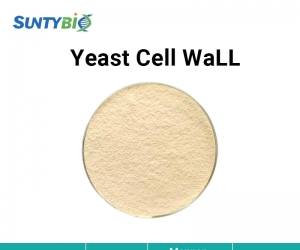
Many people may mistakenly believe that yeast cell walls are leftovers after the production of yeast extracts, but this is not the case. Yeast cell wall is the product obtained by Saccharomyces cerevisiae after autolysis, enzymolysis, separation, concentration and drying. It accounts for 20% -30% of the dry weight of yeast. It seems to be the "shell" of cells, but it is actually the "fortress" of essence.
In this structure with a thickness of only 100-200 nanometers, there are mainly two active polysaccharides:
β - glucan: located in the inner layer of the cell wall, it has a unique triple helix structure, resembling a fluffy and elastic "string".
Mannose oligosaccharides: located on the outer layer of the cell wall, resembling the "antennae" on the cell surface, play a crucial role in recognizing the external environment.
It is the division of labor and cooperation between these two components that endow yeast cell walls with various biological functions in animal bodies.
Function 1: A "vacuum cleaner" for mycotoxins
At present, with high prices of feed raw materials, the breeding industry has to use more miscellaneous meal and its substitute materials, which also brings a high risk of fungal toxin contamination. Vomit toxins, zearalenone, aflatoxins, and other toxins are like "invisible killers" hidden in feed, damaging the liver, immune system, and reproductive system of animals.
The reason why yeast cell walls can adsorb mycotoxins is not through physical pores, but through chemical binding. The oligosaccharides and glucans in the cell wall can specifically bind to various fungal toxins through intermolecular forces such as hydrogen bonding and van der Waals forces, forming stable polysaccharide toxin complexes. This complex has a large volume and cannot be absorbed by the intestine. It will be excreted from the body with feces.
Compared with traditional mineral adsorbents, yeast cell walls have a wider adsorption range and do not indiscriminately adsorb vitamins and trace elements in feed, ensuring the nutritional value of the feed while detoxifying.
Function 2: The "cleaner" and "decoration team" of the intestines
The intestine is the largest immune organ in animals and the first line of defense against pathogens. Yeast cell walls play a dual role in maintaining intestinal health.
The first role is that of a "cleaner" - clearing pathogens. Many harmful bacteria, such as Salmonella, Escherichia coli, and Clostridium perfringens, are able to establish themselves in the intestine because the lectins on their pili can recognize sugar receptors on the surface of intestinal epithelial cells, firmly attaching like a key inserted into a keyhole. The structure of mannan oligosaccharides is very similar to these receptors, and it can act as a "bait" to bind to pathogens first. After combining with oligosaccharides, pathogenic bacteria lose their ability to attach and reproduce due to their inability to use them as a carbon source, and are cleared out of the body through intestinal peristalsis. This mechanism is equivalent to preventing the "criminal" ability of bacteria without killing them, avoiding the risk of gut microbiota imbalance.
The second role is the "renovation team" - repairing intestinal mucosa. The integrity of the intestinal barrier is directly related to the health of animals. Research has shown that yeast cell walls can promote the expression of tight junction proteins (such as Occludin, ZO-1) between intestinal epithelial cells, like reinforcing the "rivets" between intestinal cells and preventing the occurrence of "intestinal leakage". At the same time, it can also stimulate the proliferation of goblet cells in the intestine, which are responsible for secreting mucin and forming a protective mucus layer covering the surface of the intestine. This is like putting a thick "bulletproof vest" on the intestines, making it difficult for pathogens to reach the intestinal wall cells.
Function Three: The "Reserve Force" of the Immune System
In traditional farming, although antibiotics can kill bacteria, they cannot actively enhance the disease resistance of animals. The β - glucan in the yeast cell wall is a natural immunomodulatory agent.
β - glucan belongs to a "pathogen related molecular pattern", and when it enters the animal body through the intestine, it can be recognized by specific receptors on the surface of immune cells such as macrophages and neutrophils. This recognition is equivalent to issuing a 'low-intensity alarm' to the immune system. After receiving the signal, immune cells enter a state of alert:
1. Enhanced phagocytosis: Macrophages have increased phagocytic ability and can quickly clear invading pathogens.
2. Regulating inflammation: Reasonably regulating the release of inflammatory factors (such as TNF - α, IL-1 β) can not only quickly respond to infections, but also avoid excessive inflammatory reactions that can cause damage to the body.
3. Activate humoral immunity: During vaccine immunization, the use of yeast cell walls in combination can increase antibody titers, making the vaccine immune effect more solid.
More noteworthy is that this immune activation is targeted. It does not stimulate the immune system indefinitely like a stimulant, causing depletion, but keeps immune cells in a "dormant" state alert. Once a real pathogen invades, the body can respond faster and stronger.
Function 4: A "booster" for growth performance
All health adjustments ultimately need to be focused on production efficiency. The performance of yeast cell wall in improving growth performance is not directly providing nutrition, but achieved through "reducing consumption and increasing efficiency".
Reduce immune energy consumption: Under stress conditions such as weaning, repotting, feeding, and heat stress, the animal immune system is overactivated, consuming a large amount of energy and protein for growth. Yeast cell walls reduce unnecessary energy loss caused by subclinical infections and inflammatory reactions by maintaining intestinal stability and regulating immunity, allowing more nutrients to be used for weight gain.
Improving digestion and absorption: Healthy intestinal villi are longer and crypts are shallower, which means a larger absorption area and faster cell renewal rate. Yeast cell walls help maintain this ideal intestinal morphology, thereby increasing feed conversion rates. In ruminant animals, studies have also found that it can regulate the rumen microbiota, promote the proliferation of beneficial bacteria, thereby improving the fatty acid composition in dairy meat and enhancing meat quality.
Conclusion
In the current transition of animal husbandry from "treatment oriented" to "prevention oriented", the application of yeast cell walls provides a logically clear idea: it does not directly replace antibiotics to kill bacteria, but optimizes the intestinal environment and immune function of animals to make them more resistant and healthier.
Whether it is piglets facing weaning stress, broiler chickens raised at high densities, or ruminants pursuing higher production performance, yeast cell walls have demonstrated wide applicability. As a product derived from nature, its value deserves to be re examined and explored by the industry in the context of ensuring animal food safety and reducing veterinary drug residues. Making good use of this' versatile 'may help us avoid some detours in breeding management.
Focus on feed additives global
supply for 13 years
Hebei Shuntian biotechnology Co.,Ltd.
Add:Machang Town,Qing County ,Cangzhou City ,Hebei,China
Tel: +86-317-2135910
E-mail:Erica@stbiol.com
© Copyright - 2018-2020 : All Rights Reserved.