Focus On Animal Nutrition And Health
Focus On Animal Nutrition And Health

If you've been following the aquaculture world lately, you may have heard a quiet buzz about something called yeast culture.
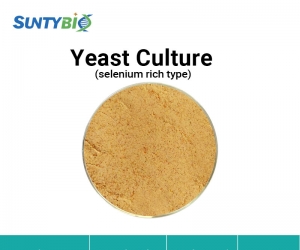
You probably know yeast from baking bread or brewing beer. But yeast culture isn't live yeast. It’s a product made by taking yeast and letting it ferment under controlled conditions. The final product contains yeast cell walls, metabolites, small peptides, organic acids, vitamins, and a bunch of other active compounds.
In simple terms: you give yeast a good environment to grow and ferment, and what you get at the end is yeast culture.
So here’s the real question: what happens when you add this stuff to fish and shrimp feed?
Everyone in aquaculture knows the saying: “Good water, good fish.” But there's another one that’s just as important: “Good gut, good fish.”
The gut is where fish and shrimp absorb nutrients, and it’s also their first line of defense against pathogens. If the gut is in bad shape, you get poor digestion, slow growth, and in worse cases, disease outbreaks and mass losses.
Yeast culture does two useful things for the gut.
First, the mannan-oligosaccharides (MOS) in it can “trick” harmful bacteria. Many pathogens (like Vibrio) attach to the gut wall using lectins on their surface. MOS looks similar to the receptors on the gut wall, so the bacteria bind to MOS instead — and then get flushed right out.
Second, it helps good bacteria grow. The β-glucans and other metabolites in yeast culture are excellent food for beneficial bacteria like Lactobacillus. More good guys means less room for the bad guys.
In one study on largemouth bass, adding 0.3% yeast culture to the feed increased beneficial Clostridia in the gut and reduced potentially harmful Staphylococcus. Another trial on juvenile American eels found that adding 0.15% yeast culture lowered two markers of gut permeability (serum D-lactic acid and diamine oxidase) — meaning the gut wall became tighter and less leaky.
Fish and shrimp don’t have the complex immune systems we do. They rely mainly on innate (non‑specific) immunity to fight off infections. This is exactly where yeast culture can help.
The key player here is β‑glucan in the yeast cell wall. When it reaches the gut, it’s recognized by immune cells, triggering a chain reaction that boosts the activity of key enzymes like lysozyme, phenoloxidase, and superoxide dismutase (SOD).
A trial on Pacific white shrimp showed that adding 0.3‑0.5% yeast culture significantly increased lysozyme, phenoloxidase, and alkaline phosphatase activity in both serum and hepatopancreas. Even stronger evidence came from a challenge test: after infection with Vibrio harveyi, shrimp that received yeast culture had significantly lower cumulative mortality than the control group.
Similar results were seen in largemouth bass. After being challenged with Aeromonas hydrophila, the yeast‑supplemented groups had much higher survival rates at 252 hours post‑infection.
So, yeast culture doesn’t kill pathogens directly. Instead, it strengthens the animal’s own defenses, helping them better withstand disease attacks.
High‑density farming is efficient, but it comes at a cost. Crowding, high summer temperatures, and fluctuating water quality all create chronic stress. Under stress, fish and shrimp produce large amounts of free radicals, leading to oxidative damage. At the same time, stress hormones like cortisol go up, suppressing growth and immunity.
Here, Saccharomyces cerevisiae (brewer’s yeast) has shown real benefits. In a study on rainbow trout, fish fed yeast culture experienced lower plasma cortisol and glucose levels after crowding stress compared to unsupplemented fish. Their liver enzymes (ALT and AST) also remained more stable — a sign of reduced stress‑related damage.
In other words, yeast culture acts like a protective layer, helping fish and shrimp stay resilient when environmental conditions get tough.
This is where things get a bit mixed. Different studies report different results — which is normal, because the effect depends on the species, dose, and farming conditions.
In grass carp, adding 18 g/kg of yeast culture for 49 days increased final body weight by 6.65% and specific growth rate by 4.22% compared to controls. Digestive enzyme activity in the mid and hind gut was also higher.
In Nile tilapia, adding 4 g/kg of Saccharomyces cerevisiae significantly improved weight gain, specific growth rate, and feed conversion ratio. Gene tests showed that the treatment increased expression of insulin‑like growth factor 1 (a growth promoter) and decreased expression of myostatin (which inhibits muscle growth).
But not every fish responds the same way. In largemouth bass and American eels, while yeast culture improved gut health and immunity, it did not significantly boost growth itself.
What does this tell us? Yeast culture isn’t a magical growth booster for every species. Its real value lies more in health maintenance. For species with sensitive guts or under high stress, better health naturally leads to better growth. For hardy, fast‑growing species, the immune and gut benefits may matter more than an extra percentage point in weight gain.
Fishmeal prices have been climbing for years, and that’s a real headache for the aquaculture industry. Yeast contains 40‑50% protein with a fairly balanced amino acid profile, plus no anti‑nutritional factors — which makes it a candidate for replacing some fishmeal.
Current research suggests that in tilapia, replacing 15% of fishmeal with Saccharomyces cerevisiae does not harm growth performance compared to a full‑fishmeal diet. Yeast extract also has an added benefit: it’s palatable and attractive to fish, especially picky eaters like eels and sturgeon.
Of course, you can’t replace too much. Fishmeal contains some active ingredients (like taurine and certain trace minerals) that yeast can’t fully substitute for yet. So the current approach is “partial replacement,” not complete removal.
If you're thinking about using yeast culture on your farm, here are some practical points.
First, not all products are the same. The effectiveness depends heavily on the yeast strain and fermentation process. Look for products with stable quality data and third‑party test reports.
Second, dosage matters. Based on existing studies, a range of 0.1‑0.5% in feed is common. But the optimal dose depends on your species, growth stage, and current health status. It’s smart to start low, observe feeding behavior and fecal consistency, and adjust from there.
Third, it’s not a medicine. Yeast culture works through prevention and maintenance — not treatment. If your fish or shrimp already have a serious bacterial infection, you still need to use appropriate treatments when necessary. The value of yeast culture is in building a strong baseline so that disease is less likely to occur in the first place.
Fourth, store it properly. Yeast culture can absorb moisture from the air. Once opened, keep it sealed, away from light, and in a cool, dry place to prevent mold or spoilage.
Yeast culture isn’t brand new, but its potential in aquaculture has only been systematically studied over the last 10‑15 years. The core logic is pretty simple: get the gut and immunity right first; then talk about growth and feed efficiency. In the era of antibiotic reduction and prohibition, this “prevention‑first” approach is gaining more and more support.
That said, yeast culture is no miracle cure. Good farming basics — proper stocking density, sound water management, and a well‑designed feeding program — will always be the foundation. Yeast culture is a useful helper, but a helper can’t replace the farmer’s own skill and care. Used wisely, it can be a solid tool on your path to antibiotic‑free aquaculture.
Focus on feed additives global
supply for 13 years
Hebei Shuntian biotechnology Co.,Ltd.
Add:Machang Town,Qing County ,Cangzhou City ,Hebei,China
Tel: +86-317-2135910
E-mail:Erica@stbiol.com
© Copyright - 2018-2020 : All Rights Reserved.