Focus On Animal Nutrition And Health
Focus On Animal Nutrition And Health

Spring brings warmer weather and revival, but for poultry farmers, this season also hides hidden dangers—large temperature fluctuations, high humidity, leading to frequent gut issues in poultry, decreased feed conversion rates, and even the lurking threat of pathogens like Salmonella. How can you build a solid defense line for your flock's gut health this spring? Today, let's talk about active yeast, nature's very own "gut guardian angel."
Rising but volatile spring temperatures, coupled with increased humidity, pose significant challenges for poultry farming:
Gut Microbiota Imbalance: Temperature and humidity changes can easily reduce beneficial bacteria in the poultry gut while promoting the growth of harmful bacteria.
Pathogen Threat: Pathogens like Salmonella and E. coli multiply faster in warm, damp environments.
Increased Stress Response: Unpredictable spring weather leads to more stress reactions in poultry, weakening their immunity.
Maintaining gut health is crucial for successful spring farming. This is where active yeast, specifically Saccharomyces cerevisiae var. boulardii, comes in as a scientifically proven effective choice.
Active yeast has a unique ability—it actively consumes oxygen within the gut. This might sound simple, but its impact on poultry gut health is profound.
Why? Because many pathogenic bacteria like Salmonella and E. coli are "aerobic" or "facultative anaerobic," meaning they need oxygen to thrive. When active yeast beats them to it and "eats up" the oxygen, it effectively cuts off these harmful bacteria's "lifeline," naturally inhibiting their growth and reproduction.
In one commercial trial, broilers supplemented with S. cerevisiae boulardii showed significantly reduced pathogen colonization. Similar effects were observed in layer hen operations, with notable decreases in E. coli counts.
Spring often disrupts the gut flora balance in poultry, and active yeast helps maintain equilibrium. Research indicates that using yeast culture as a feed additive can enhance poultry production performance, promote intestinal development, and support overall health.
More specifically, yeast and its derivatives work by:
Regulating the gut microbial community: Creating a favorable environment for beneficial bacteria.
Increasing villi height: Expanding the intestinal surface area for better nutrient absorption.
Improving the villus height-to-crypt depth ratio: A direct indicator of improved gut health.
Better gut development naturally leads to improved feed utilization. Studies show that certain probiotic combinations, including yeast, can increase broiler body weight by 13% and improve feed conversion ratio from 1.75 to 1.50.
With frequent weather changes in spring, poultry are prone to stress and weakened immunity. Active yeast also plays a vital role here.
The yeast cell wall contains bioactive components like β-glucans and mannan-oligosaccharides (MOS) , which can:
Stimulate immune responses: Activating immune cells like macrophages.
Modulate inflammatory reactions: Helping control excessive inflammation when challenged by pathogens.
Increase antibody levels: Enhancing resistance against specific pathogens.
In fact, the benefits of yeast cultures stem from their antioxidant, anti-inflammatory, and pathogen-inhibiting mechanisms. This means yeast doesn't just directly combat harmful bacteria; it also helps poultry build a stronger, self-sustaining defense system.
In nutritional science, yeast is a true "multitasker." It functions as:
Probiotic: Live yeast cells acting directly in the gut.
Prebiotic: Components like MOS from the cell wall that nourish beneficial bacteria.
Postbiotic: Metabolic byproducts released during yeast fermentation or lysis, also beneficial to the host.
This multifaceted role gives active yeast a unique position in poultry nutrition—it directly targets pathogens while indirectly promoting poultry health through various pathways.
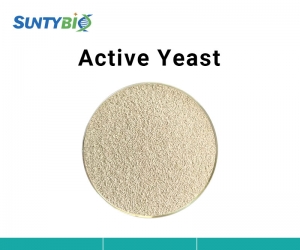
Choose the Right Product: The market offers various forms like active dry yeast, yeast culture, and yeast cell wall extracts. Select based on your goal. For disease resistance, products containing live active yeast might be better. For improving gut structure comprehensively, yeast culture could be more suitable.
Start Early: Begin adding active yeast to feed or water before spring arrives. This allows the poultry gut to establish a healthy microbiota proactively, focusing on "prevention rather than cure."
Use Consistently: The benefits of active yeast are cumulative. Consistent use throughout spring yields more stable gut health.
Integrate with Management: Active yeast isn't a "silver bullet." Combine it with good management practices, proper vaccination programs, and other strategies to maximize its effectiveness.
Gut health is the key to successful spring poultry farming. As a natural and safe feed additive, active yeast provides comprehensive gut protection through its triple mechanism: inhibiting harmful bacteria, promoting gut development, and enhancing immunity.
In an era of increasing restrictions on antibiotics, the importance of such functional feed additives is becoming ever more apparent. Active yeast not only helps poultry healthily navigate the challenging spring season but also improves farming profitability. It's a valuable tool worth every farmer's attention.
This spring, give your flock's gut the "guardian angel" it deserves!
Focus on feed additives global
supply for 13 years
Hebei Shuntian biotechnology Co.,Ltd.
Add:Machang Town,Qing County ,Cangzhou City ,Hebei,China
Tel: +86-317-2135910
E-mail:Erica@stbiol.com
© Copyright - 2018-2020 : All Rights Reserved.