Focus On Animal Nutrition And Health
Focus On Animal Nutrition And Health

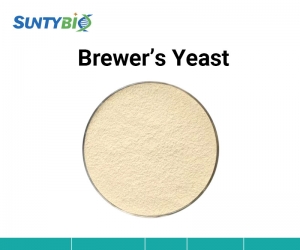
Brewer’s yeast is the scientific name Saccharomyces cerevisiae. Breweries ferment grains to make beer, and the leftover yeast sludge gets dried into a powder or flakes. That powder turns out to be surprisingly rich in nutrients that horses really benefit from.
You might be wondering: why would a racehorse need something that comes from a beer factory? Well, it’s not about the beer – it’s about what happens deep inside the horse’s gut.
Horses are what we call hindgut fermenters. Fancy term, but here’s what it means: a horse’s health and energy levels depend almost entirely on how well the tiny microbes living in its large intestine are doing. Those bugs break down fiber from hay and grass into volatile fatty acids – and those fatty acids are a horse’s main source of energy.
Here’s the problem. Racehorses eat a lot of grain and concentrates – way more than a regular pasture horse. All that starch and sugar can upset the balance in the hindgut. The pH drops, good bacteria die off, and acid-producing bacteria take over. That leads to discomfort, poor digestion, and in serious cases, colic or laminitis. Not what you want right before a race.
Brewer’s yeast helps steady things out. Research shows that adding it to a horse’s diet helps keep the hindgut from getting too acidic, especially during stressful times like travel or a sudden change in feed. Some studies have also found that yeast improves how well a horse digests fiber and dry matter. In plain English: your horse gets more nutrition from the same amount of hay.
One Chinese study on Mongolian racehorses looked at this pretty closely. They gave brewer’s yeast to racing horses and measured antioxidant levels after competition. The yeast group had significantly higher levels of SOD, CAT, and GSH-Px – all good signs that their bodies were handling oxidative stress better. The same study also found higher levels of glycine in their blood, which matters for muscle recovery.
Hard training wears down more than just muscles. It also hits a horse’s immune system. You see it all the time – a horse feels fit, works hard, then picks up some minor bug and loses two weeks of training.
Brewer’s yeast contains beta-glucans. A 2022 study on Polish sport horses found something interesting: after 21 days of supplementing with beta-glucans from brewer’s yeast, the horses showed higher levels of lysozyme, total protein, and gamma-globulins in their blood. Those changes started around day 7 and peaked at day 14 to 21. The best dose seemed to be 5 to 10 grams a day.
What does that mean for your horse? It means the non-specific immune system – the first line of defense – gets stronger. Horses on brewer’s yeast tend to bounce back faster after hard races and don’t get knocked down by every little thing going around the barn.
This is the part that owners and trainers notice first. A couple of weeks after starting brewer’s yeast, the coat starts to shine. The hair lies smoother, and even the hooves look better.
The Journal of Animal Science published a study where they put 12 performance horses on a calorie-restricted diet. One group got brewer’s yeast. Their coat condition score went from 3.2 to 3.7 on a 5-point scale. That’s not statistically significant in their numbers, but in real life? Any trainer can see that difference just by running a hand down the horse’s neck.
Why does this happen? Brewer’s yeast is loaded with B vitamins – especially biotin. Biotin is famous for helping hooves and coats. It also has high-quality protein and amino acids that support muscle repair.
And there’s another benefit you don’t always think about: B vitamins play a big role in energy metabolism. They act as helpers that turn feed into usable fuel. A horse getting enough B vitamins simply uses its feed more efficiently.
Some owners also say their horses seem calmer on brewer’s yeast. That could be the B1 (thiamine), which is known to affect nervous system function. A thiamine-deficient horse tends to be jumpy and nervous. Giving brewer’s yeast is a gentle way to keep those levels where they should be.
For years, antibiotics and other additives were used in animal feed to keep guts healthy. But with resistance concerns and tighter regulations, people are looking for cleaner options. Brewer’s yeast fits that bill.
The mannan-oligosaccharides (MOS) in brewer’s yeast work in a clever way. They bind to harmful bacteria in the gut and stop them from sticking to the intestinal wall. Those bad bugs then get passed out in the manure. This is particularly useful for racehorses that get shipped to different tracks, mixed with unfamiliar horses, and exposed to all kinds of new bugs.
That said, brewer’s yeast isn’t a replacement for good management or vet care. Think of it as a helper – an extra layer of support that makes everything else work a little better.
Let’s get practical. How do you actually use this stuff?
Dosage. For a 500 kg (1,100 lb) horse, most recommendations sit around 50 grams per day. For smaller horses or yearlings, 25 grams is fine. Some products suggest 12 to 25 grams. Others go up to 150 grams depending on purity. Check the label on your product and start on the lower end.
How to feed. Mix it into the regular feed – grain, mash, or pelleted feed. One heads-up: brewer’s yeast has a slightly bitter taste. Some horses aren’t crazy about it at first. Start with a small amount and increase slowly over a week. Most horses get used to it just fine.
Short term or long term? Brewer’s yeast is safe for long‑term use. You won’t see dramatic changes overnight. Give it at least two to three months to really see the benefits in coat, gut stability, and recovery.
Which horses need it most? Hard‑training racehorses, obviously. But also horses that are hard keepers – the thin ones that never seem to put on weight. Horses with touchy guts. Any horse that just went through a feed change, a long trailer ride, or an illness. That’s when brewer’s yeast really earns its keep.
Brewer’s yeast isn’t magic. It won’t turn an average horse into a stakes winner overnight. But what it does is quietly valuable: it steadies the gut, backs up the immune system, and improves how well the horse uses its feed. In racing, small margins matter. A horse that feels good in its gut, looks sharp in its coat, and recovers a day faster after a hard race – that horse has an edge.
Brewer’s yeast is the unglamorous workhorse of supplements. It just sits there in the feed tub, doing its job, no flash or hype. And that’s exactly why so many trainers are adding it to their program.
One last thing: before you add anything new to your horse’s diet, it never hurts to run it by your vet or an equine nutritionist. Every horse is different, and a professional who knows your horse can help you get the dosage and timing right.
Focus on feed additives global
supply for 13 years
Hebei Shuntian biotechnology Co.,Ltd.
Add:Machang Town,Qing County ,Cangzhou City ,Hebei,China
Tel: +86-317-2135910
E-mail:Erica@stbiol.com
© Copyright - 2018-2020 : All Rights Reserved.