Focus On Animal Nutrition And Health
Focus On Animal Nutrition And Health

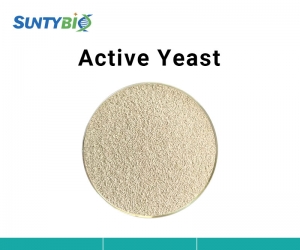
Research data shows that adding an appropriate amount of active dry yeast to feed can increase milk production in lactating cows by 2% -10%, while significantly improving milk fat and protein content.
Active dry yeast, as a natural feed additive, is increasingly being adopted by modern ranches worldwide. It can not only promote the health of cows, but also directly increase the yield and nutritional value of milk, bringing considerable economic benefits to the pasture.
01 Data Validation: Improvement Effect on Milk Production
Scientific experiments are the best way to test results. Multiple studies on different dairy cow breeds have confirmed the positive effects of active dry yeast.
Research on Holstein dairy cows has found that adding 5 grams of active dry yeast per day to the basal diet can significantly increase the cows' feed intake and milk production efficiency.
More specific data comes from experiments on lactating yaks. Under warm season conditions, the experimental group that added 100 grams of active yeast daily achieved a significant increase in milk production.
02 Quality Improvement: Changes in Key Indicators of Milk Composition
In addition to increasing production, the more important role of active dry yeast is to enhance the intrinsic quality of milk, which directly determines the nutritional and market value of milk.
In a controlled study on cold season lactating yaks, the experimental group outperformed the control group in key indicators of milk composition:
Milk protein ratio: increased by 0.68 percentage points
Milk fat percentage: increased by 0.49 percentage points
Lactose rate: increased by 0.11 percentage points
Research on Holstein cows also shows that although the effect on milk protein content is not significant, it can significantly increase milk fat production and improve the overall nutritional composition of milk.
03 Mechanism of action: From rumen health to mammary gland synthesis
The reason why active dry yeast can simultaneously improve the "quantity" and "quality" of milk is due to its multiple biological functions in cows:
Improving rumen microbiota balance: Active dry yeast can promote the growth of fiber degrading bacteria, stabilize rumen pH, and create an internal environment more conducive to nutrient digestion.
Improving nutrient utilization: Studies have shown that adding active dry yeast can increase the apparent digestibility of dry matter, crude protein, and fiber in cows, which means more feed nutrients are absorbed and utilized.
Optimizing metabolic pathways: Active dry yeast promotes the production of more propionic acid in the rumen - an important precursor for dairy cows to synthesize glucose, which is a key raw material for lactose synthesis in the mammary gland.
04 Application Guide: Scientific Addition and Economic Returns
In practical applications, the use of active dry yeast needs to consider the breed, physiological stage, and production goals of dairy cows:
Suggestion for adding quantity:
Holstein lactating cows: 5 grams per head per day (with a live cell count of ≥ 20 billion cells per gram)
Lactating yak: 80-100 grams per head per day
Economic benefit analysis:
Although active dry yeast may increase certain feed costs, the yield and quality improvements it brings usually result in more significant economic returns. Calculated based on a 5% increase in milk production, the input-output ratio is significantly positive.
Focus on feed additives global
supply for 13 years
Hebei Shuntian biotechnology Co.,Ltd.
Add:Machang Town,Qing County ,Cangzhou City ,Hebei,China
Tel: +86-317-2135910
E-mail:Erica@stbiol.com
© Copyright - 2018-2020 : All Rights Reserved.