Focus On Animal Nutrition And Health
Focus On Animal Nutrition And Health

A while ago, I was chatting with a friend who raises California bass. He said that fish meal is too expensive now, costing almost 20000 yuan per ton, and the cost of feed is suffocating. I asked him if he had tried beer yeast, and he replied, "Can that thing really feed fish
Can. Moreover, there have been many studies conducted both domestically and internationally in recent years, and the data is quite solid.
What is beer yeast?
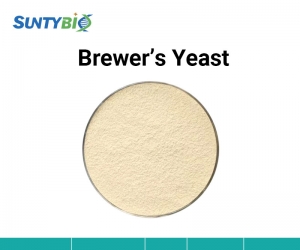
Beer yeast is a byproduct produced during the beer brewing process, mainly composed of inactivated yeast cells. After drying, the crude protein content can reach 40% to 60% of the dry matter. In addition to protein, it is also rich in B vitamins, minerals, as well as beta glucans and oligosaccharides in yeast cell walls - these two are the real things that work.
Beer waste yeast has a large global annual production, and if not utilized, it becomes industrial waste, which can be difficult to handle. Making it into a feed additive is like turning waste into treasure.
Promote growth and reduce feed costs
This is what farmers are most concerned about.
**The research on sea bass is quite representative. Peng Kai et al. conducted an experiment: 525 juvenile sea bass fish with an initial weight of about 10 grams were selected and divided into 5 groups. They were fed with low fish meal feed (25% fish meal) supplemented with 0, 0.1%, 0.2%, and 0.3% beer yeast extract, respectively, for 56 days. The addition of 0.1% to 0.3% of the group resulted in improved growth performance and antioxidant status. Simply put, if fish meal is used less, the fish will not grow less.
**There are also many studies on tilapia. Scholars conducted a 51 day feeding experiment, using different proportions of beer yeast (0%, 10%, 15%, 20%, 30%, 40%) to replace fish meal. It was found that when the proportion of beer yeast added did not exceed 15%, the weight gain and feed utilization rate of fish were good, and there was no significant change in fish body composition. According to some sources, replacing 15% of fish meal with brewing yeast in tilapia feed did not result in significant differences in growth performance compared to the control group, but reduced feed costs by 18%.
**There is also data on grass carp. Research by the Guangdong Academy of Agricultural Sciences has shown that adding beer yeast powder and beer yeast extract can significantly reduce the feed efficiency of grass carp and improve protein efficiency. The final average weight, weight gain rate, and specific growth rate of the beer yeast extract group were significantly higher than those of the other experimental groups.
**A study suggests that adding 5% beer yeast is a reasonable source of protein supplementation for carp.
**The situation of largemouth black bass is slightly unique. The study by Cui Zhenghe et al. found that adding 1% or 2% fermented beer yeast to low fish meal feed had no significant effect on fish weight gain, feeding rate, and feed coefficient. That is to say, adding it will not be better, but it will not be worse either. Yeast can be used to replace a portion of fish meal without sacrificing growth performance.
**Regarding the substitution of fish meal * *, a review suggests that beer yeast can replace 50% of fish meal protein without negatively affecting fish growth, and feed efficiency can be improved by up to 30%. The protein content of beer waste yeast is about 49%, and its price is cheaper than fish meal. From a cost perspective, this alternative space is considerable.
Protect the intestines and enhance immunity
When the fish intestine is healthy, the food it eats can be absorbed completely.
**The research on Atlantic salmon is very indicative. A scholar conducted a 9-week feeding experiment by adding 2.5g/kg of autolytic beer yeast to the feed of Atlantic salmon fry. It was found that fish fed with yeast had longer intestinal mucosal folds, increased microvilli density, and increased the number of goblet cells. The more goblet cells there are, the more abundant mucus they secrete, making it less easy for pathogens to invade.
Changes were also observed at the genetic level - fish fed with autolytic beer yeast showed upregulation of the expression of both IL-1 β and Muc-2 genes. IL-1 β is an important immune regulatory factor, and Muc-2 is the main component of intestinal mucus, both of which are directly related to immune protection and intestinal barrier function.
In terms of gut microbiota, the yeast added group showed an increase in the relative abundance of Staphylococcus in the fish intestinal tract, while the abundance of Streptococcus and Weissella decreased. This change in microbial community structure is beneficial for maintaining intestinal health.
**Research on silver carp has also confirmed that a composite microbial preparation composed of beer yeast, Lactobacillus acidophilus, and Bacillus subtilis can improve the growth performance, nutritional apparent digestibility, and immune function of fish.
**Under normal density farming conditions, brewing yeast, as a probiotic, can effectively promote growth, improve intestinal health, and enhance disease resistance in tilapia.
Improving water quality
Water quality management in aquaculture is a major issue. A study has found that a composite microbial preparation composed of Bacillus subtilis, Lactobacillus casei, Pseudomonas aeruginosa, and beer yeast can increase dissolved oxygen in water and significantly reduce pollution indicators such as ammonia nitrogen, nitrite nitrogen, and sulfides.
Research on largemouth black bass also shows that adding fermented beer yeast to low fish meal feed does not significantly increase the emissions of aquaculture waste (carbon, nitrogen, phosphorus).
It can also be used on shrimp
Although the question is about fish, by the way, it is worth mentioning that shrimp seedling experiments have confirmed that beer yeast, whether used as a feed additive for juveniles or a water quality improver, has the effect of inhibiting bacterial growth and reproduction, and improving seedling survival rate.
What should be noted when using?
**Addition amount * *: Different varieties vary. The Atlantic salmon uses 2.5g/kg; Recommended for sea bass is 0.1% -0.3%; A substitution ratio of no more than 15% for tilapia is relatively stable; Carp is recommended to be around 5%.
**Product Form: There are various forms of beer yeast available on the market, including autolytic beer yeast, beer yeast extract, fermented beer yeast, and beer yeast powder. Research on Atlantic salmon shows that autolytic beer yeast is more effective than soluble dry yeast extract in improving intestinal structure and immunity.
**Not a panacea: Studies on largemouth black bass have shown that the effect is not significant in certain varieties or at certain dosages. Suggest conducting small-scale experiments first to confirm effectiveness before expanding.
Say a few honest words
The price of fishmeal is increasing year by year, and finding alternatives is an unavoidable path for aquaculture. Beer yeast, as a byproduct of the beer industry, has a stable source, high protein content, and is cheaper than fish meal. There is research data supporting the promotion of growth, protection of the intestine, enhancement of immunity, and improvement of water quality.
However, the situation of each pond is different, and the effect will vary depending on the variety, density, and water quality. If conditions permit, try taking one or two ponds first and calculate the amount of investment, output, and cost savings. Only by presenting the data can we determine whether it is worth it or not.
>Disclaimer: The data in this article is sourced from public literature. Please refer to the actual situation and implement the specific addition plan under the guidance of professional personnel.
Focus on feed additives global
supply for 13 years
Hebei Shuntian biotechnology Co.,Ltd.
Add:Machang Town,Qing County ,Cangzhou City ,Hebei,China
Tel: +86-317-2135910
E-mail:Erica@stbiol.com
© Copyright - 2018-2020 : All Rights Reserved.