Focus On Animal Nutrition And Health
Focus On Animal Nutrition And Health

A while ago when I went to Zhanjiang, I met an old friend named Li who raises South American white shrimp. He made a bold attempt this year - comparing two ponds, feeding one with regular ingredients and adding beer yeast to the other.
Three months later, the results came out: the shrimp in the experimental pond were not only evenly sized, but also had good vitality. After calculation, the yield per mu was nearly 200 pounds higher than that of the control pond. Li Ge told me, "This thing is really not a gimmick
First, let's talk about what beer yeast can do in aquatic products
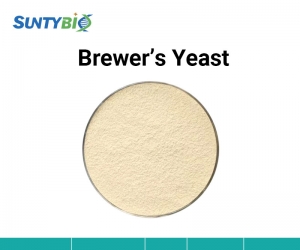
Beer yeast is a byproduct produced during the beer brewing process, with a crude protein content that can reach 40% -60% of dry matter. In addition to protein, there are also abundant B vitamins, minerals, as well as beta glucans and oligosaccharides in yeast cell walls - these two are the true "core weapons".
In aquaculture, it can mainly do these things:
Help fish and shrimp grow and improve feed conversion rate
This is what farmers are most concerned about. Norwegian scholars conducted experiments on Atlantic salmon by adding 2.5g/kg of autolytic beer yeast to their feed. Although the growth rate did not change significantly in the short term, the intestinal structure of the fish improved significantly - the folds of the intestinal mucosa became longer, the density of microvilli increased, indicating an increase in absorption area.
Research on tilapia has also confirmed that adding brewing yeast to feed can improve growth performance and increase survival rates, especially during the fry and juvenile stages, with more prominent effects.
The experiment on juvenile sea bass has more reference value: adding 0.1% -0.3% beer yeast extract to low fish meal feed (25% fish meal) improved the growth performance and antioxidant status of the fish after 56 days of testing.
Protect the intestines and enhance physical fitness
If the intestines are unhealthy, fish and shrimp are prone to problems. The experimental data of Atlantic salmon shows that after adding beer yeast, the number of goblet cells in the fish intestinal tract significantly increases - the more these cells, the more abundant mucus they secrete, making it less easy for pathogens to invade.
Changes were also observed at the genetic level: fish fed with autolytic beer yeast showed upregulation of the expression of both IL-1 β and Muc-2 genes. The former is an important immune regulatory factor, while the latter is the main component of intestinal mucus, both of which are directly related to immune protection and intestinal barrier function.
There have also been positive changes in the gut microbiota - in the fish gut of the yeast additive group, the Staphylococcus genus increased, while the Streptococcus and Weissella genera decreased. This change in microbial community structure is beneficial for maintaining intestinal health.
Save costs and replace some fish meal
The price of fishmeal is rising year by year, and finding alternatives is something that all aquaculture farmers are pondering. Beer yeast does have potential in this regard.
Indian scholars' research on South Asian wild carp shows that replacing 30% of fish meal protein with beer yeast significantly improves the weight gain, daily weight gain, specific growth rate, and survival rate of the fish compared to the control group, and also improves feed conversion rate and protein efficiency. The research conclusion is that replacing 30% fish meal can significantly promote growth and enhance immunity.
A review of literature suggests that beer yeast can replace 50% of fish meal protein without negatively affecting fish growth, and can increase feed efficiency by up to 30%.
Assist in improving water quality
If water quality management is not done well, any medicine will be useless. A study has found that a composite microbial preparation composed of Bacillus subtilis, Lactobacillus casei, Pseudomonas aeruginosa, and beer yeast can increase dissolved oxygen in water and significantly reduce pollution indicators such as ammonia nitrogen, nitrite nitrogen, and sulfides.
Research on largemouth black bass also shows that adding fermented beer yeast to low fish meal feed does not significantly increase the emission of aquaculture waste - carbon, nitrogen, and phosphorus do not change much.
How effective is it on shrimp?
Li Ge's pond is not an exception. The shrimp seedling experiment also confirmed that beer yeast has the effect of inhibiting the growth and reproduction of bacteria and improving the survival rate of seedlings, whether as a feed additive for juveniles or a water quality improver.
The research on Vannamei shrimp provides specific recommendations: from the perspective of improving immunity, adding 0.1% of β - glucan preparation is sufficient; If you want to promote growth, it can be increased to 0.2%.
Another interesting discovery - a patent mentions that a compound feed containing beer yeast can significantly improve the body color and reduce fat content of farmed shrimp, while also increasing the content of glycogen, polyunsaturated fatty acids, and amino acids in muscles. Simply put, the appearance and taste of shrimp can be improved.
A set of market data for reference
The global market for aquatic feed yeast is expected to reach a size of 968 million US dollars by 2025 and is projected to reach 2.058 billion US dollars by 2033, with a compound annual growth rate of 9.89%.
There are two main driving forces behind the growth: firstly, the increasing demand for sustainable and high-quality protein sources in aquaculture, and secondly, people are paying more attention to the intestinal health and immunity issues of farmed fish and shrimp.
Another noteworthy change is that the proportion of feed yeast used in aquatic feed has increased from 28% in 2020 to 42%. More and more people are moving in this direction.
What are the requirements for use?
Addition reference: Different varieties and stages vary. The Atlantic salmon uses 2.5g/kg; Recommended for sea bass is 0.1% -0.3%; The recommended concentration of β - glucan in Penaeus vannamei is 0.1% -0.2%. Don't start with a high dose right away, it's safer to start with a low dose.
The product form should be distinguished: there are several types available on the market, including autolytic beer yeast, beer yeast extract, fermented beer yeast, yeast hydrolysate, etc. Research on Atlantic salmon shows that autolytic beer yeast is more effective than soluble dry yeast extract in improving intestinal structure and immunity. Ask clearly before buying, don't confuse.
Not a 'panacea': Some studies have also indicated that the effect is not significant under certain varieties or dosages. So it's still the same sentence - conduct comparative experiments first and speak with the data from your own pond.
Finally, let me say a few words
Fish meal substitution is an unavoidable hurdle in aquaculture. As a byproduct of the beer industry, beer yeast has stable sources, relatively reasonable prices, and good nutritional indicators. There is research data supporting the promotion of growth, protection of the intestine, enhancement of immunity, and improvement of water quality.
However, the situation of each pond is different, and the variety, density, and water quality will all affect the final effect. If conditions permit, try taking one or two ponds first and calculate the amount of investment, output, and cost savings. Once the data is presented, you will know whether it is worth it or not.
Friends who have tried it are welcome to share your dosage and effectiveness in the comment section, and let's communicate together.
Disclaimer: The data in this article is sourced from public literature. Please refer to the actual situation and implement the specific plan under the guidance of professional personnel.
Focus on feed additives global
supply for 13 years
Hebei Shuntian biotechnology Co.,Ltd.
Add:Machang Town,Qing County ,Cangzhou City ,Hebei,China
Tel: +86-317-2135910
E-mail:Erica@stbiol.com
© Copyright - 2018-2020 : All Rights Reserved.